Meiji Restoration
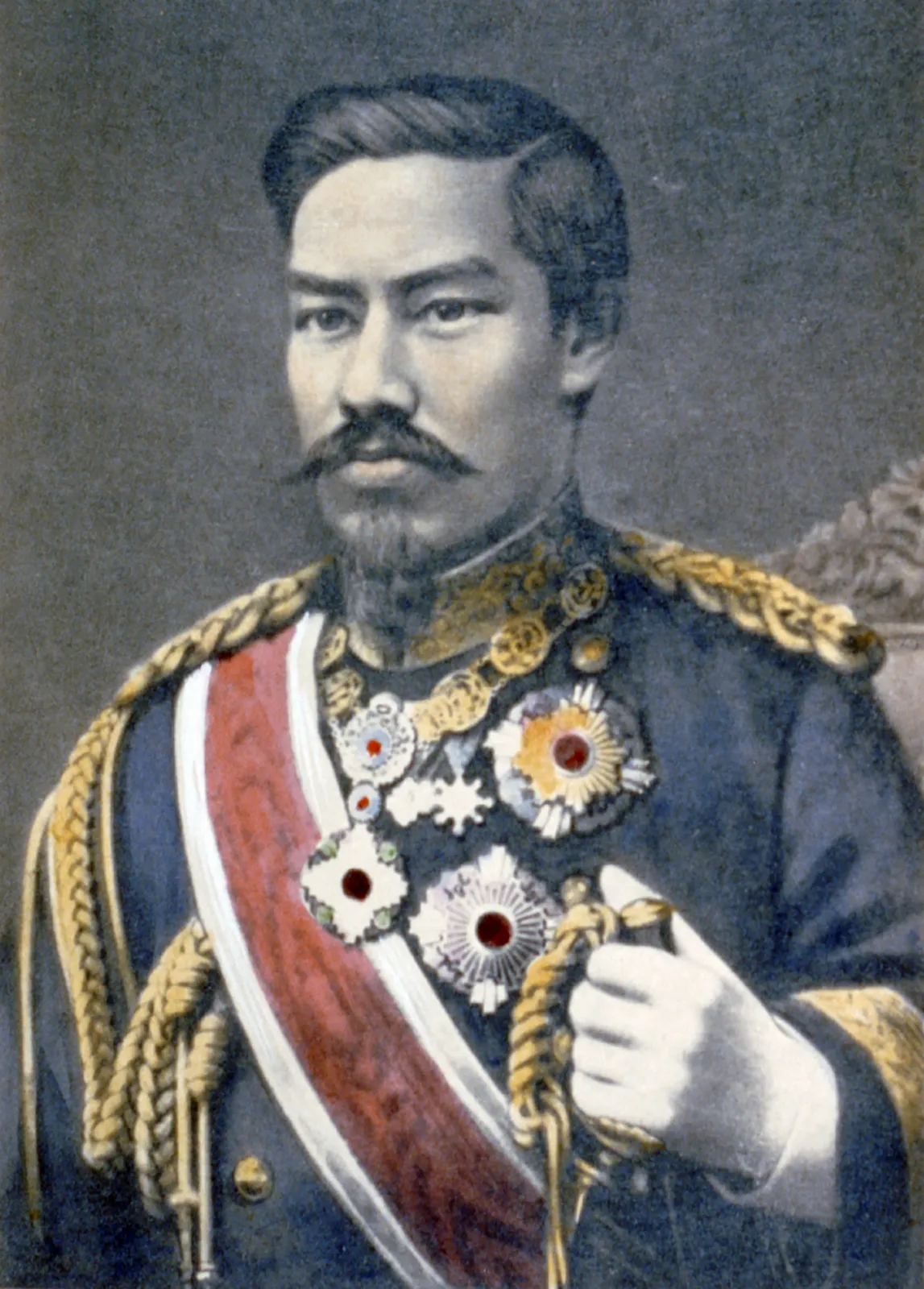
Meiji, the emperor of Japan
Since the 12th century, Japan was ruled by the Bakufu. The country was divided into Han ruled by Daymo. The Edo period from 1603-1868 was the last period of shogunate rule under the Tokugawa family, whose foreign policy included the isolation of Japan. From the 19th century onwards, however, pressure from other countries increased sharply. In 1854, the US naval squadron under Commodore Matthew Perry forced Japan to open up. This opening created so-called unequal treaties. The Shogunate accepted this, and that accepting led to disputes within Japan. Under the name of the Tenno (Emperor Meiji), some Daymo and the court nobility campaigned for a restoration of imperial rule under the slogan "Honour the Emperor, drive out the barbarians!". As a result, Shogun Tokugawa returned his governmental powers to the Tenno, but wanted to participate in the new government. In the name of the Tenno, however, the new government was declared with the exclusion of the Tokugawa family. This was the trigger for the Boshin War (1868-1869), between supporters of the Tenno and the Tokugawa. The Boshin War ended on 3 May with the victory of the Tenno.
The new government
At first, the government was formed according to the old Dajōkan emperor system, and consisted of a nationalist, imperialist wing and a progressive wing. However, the government wanted a more modern system and was strongly oriented towards the West. The Daymo had to give back their Han in the course of the Meiji Restoration and prefectures were formed. Likewise, Japan's economy was reorganised along Western lines and was able to grow. In 1885, the government was reorganised into a cabinet according to the European model.The end of the Meiji Restoration was the enactment of the Constitution of the Empire of Japan in 1890.
Bakufu: The name of the shogunate government, a shogun was a samurai military dictator of Japan. (1185 to 1868.)
Han: Fiefdoms that were given to feudal lords, which were called Daymo.
Unequal treaties: Treaties that were signed with Western powers during the 19th and early 20th centuries by Qing Dynasty China and late Tokugawa Japan after suffering military defeat by the foreign powers or when there was a threat of military action by those powers.
All sources can be found here.